Planning a Kyoto itinerary for 2 days? You’re in luck because Kyoto knows how to impress fast– it absolutely won me over when I visited and I’m dying to go back again.
The incredible train system makes it easy to experience ancient temples, peaceful forest trails, and lantern-lit alleys that make you feel like you’ve traveled to a different century.
Between the temples, the torii gates, the gorgeous gardens, and the mountain trails, Kyoto packs centuries of beauty into just a few unforgettable days.
This 2-day Kyoto itinerary blends the must-see spots with a few hidden corners– including one of my favorite nature walks in Japan: the Kurama to Kibune trail.
You won’t regret hiking this path where you’ll trade city crowds for forest serenity, the smell of incense, and a bowl of noodles by the river.
Ready to see Kyoto? Let’s dive in. 🏯🌸
When you purchase items through links on my site, I earn a tiny commission at no cost to you.
Thank you for purchasing through me- you’re the best! 🤩
⭐️ My Top Picks for Kyoto:
- Top Hotel- The Celestine Hotel for its gorgeous onsen, Michelin star restaurant, and perfect location in Gion.
- Top Activity- A Ramen and Gyoza Cooking Class for a taste of Japan you can make at home.
- Top Day Trip- Take a Day Trip to Nara to visit the giant Buddha, UNESCO sites, and friendly deer.
Why Visit Kyoto
Kyoto is truly the soul of Japan and a wonderful place to visit to get a sense of the country. Because it was the imperial capital for more than a thousand years, it’s filled with temples, gardens, and cobblestone streets that seem pulled straight from a movie.
You can spend a morning wandering through orange torii tunnels, eat lunch at a 400-year-old market, and still be sipping matcha in a riverside café by afternoon. Kyoto’s magic lies in contrast– ancient meets modern, peaceful meets bustling.
This Kyoto itinerary for 2 days gives you the perfect mix of highlights and hidden gems– temples, traditional neighborhoods, scenic hikes, and amazing food.

Be sure to sign up for access to my
⭐️Travel Resource Library⭐️
where you’ll find all sorts of travel help like itinerary planning, packing lists, and much more!
Day 1 of Your Kyoto Itinerary: Temples, Gion & Gardens
Today’s all about exploring Kyoto’s old-world charm—think lantern-lit streets, peaceful temples, a park that’s especially lovely in spring, and one of the best little alleys in Japan for dinner.
You’ll be walking a fair bit, but trust me, it’ll be worth every step.
Morning: Start in Gion
Kick off your day at Gion before the rest of the tourists show up. This is Kyoto’s most famous geisha district, and it’s every bit as atmospheric as you imagine. Wooden teahouses line narrow lanes, lanterns swing in the breeze, and there’s a calm in the air that makes you walk just a little slower.
If you show up before 9am, you’ll have the place all to yourself to enjoy the tranquil river– and take a crowd-free selfie on the Yamato-bashi (bridge).

🏮Hey! If you want to do this itinerary backwards and come in the evening instead, you might spot a geiko or maiko (Kyoto’s geisha and apprentices) headed to an appointment under the lanterns.

The Higashiyama Ward stretches up into the hills and is packed with some of Kyoto’s most famous temples and charming streets. This is where you’ll find gorgeous places tucked into a landscape of tiled rooftops, stone walkways, and there are beautiful views over the city.

The best part? You can stroll from temple to temple, snack as you go, and never be far from a scenic viewpoint or a surprise garden. It’s Kyoto at its most walkable and most photogenic.
🏮 Wondering where to stay in Kyoto? Check out my Guide to the Best Kyoto Hotels for info about areas and traditional stays.


Visit Chion-in Temple
Next up is Chion-in, a massive temple complex just a few minutes’ walk from Gion.
This incredible temple is one of those places in Kyoto that makes you stop in your tracks– not just because of its size, but because of the peaceful atmosphere tucked behind its towering gate. The main entrance, Sanmon Gate, is the largest wooden gate in Japan, and when you walk under it, it feels like you’re stepping into a different world.

From there, stone steps (the gentlemen’s path) or a ramp (the ladies’ path) lead you up into the temple grounds, where you’ll find centuries-old halls, manicured gardens, and sweeping views over the city.

The complex is big, but never overwhelming, and there are plenty of quiet corners to pause and take it all in. (And a super nice security guard that just might offer to take your photo.)


At the Chion-in Temple complex, you might hear the deep ring of the massive bell used during special ceremonies or stumble upon monks in training. It feels like a working temple, not just a tourist stop.
And while it’s close to busy areas like Gion and Maruyama Park, it’s often a bit less crowded, making it a great spot to slow down during your Kyoto itinerary.


If you’ve got time, explore the Hojo Teien Garden on the grounds– it’s small but peaceful and beautifully maintained. The gardener stopped raking the gravel to make sure I saw all the best places.

Or you can check out the Yuzen-en Garden by the entrance instead. Or visit both- there’s no such thing as too much Japanese garden.
Stroll through Maruyama Park + Lunch
Tucked between Chion-in Temple and Yasaka Shrine, Maruyama Park is the kind of place where locals and visitors take time to slow down– whether they’re picnicking under the trees, feeding the koi in the pond, or just taking a quiet stroll.
It’s also the perfect place for a traditional photo shoot (and trust me, there were lots of people doing exactly that).
🍽️ Lunch: I grabbed some spicy karaage in front of the famous weeping cherry tree in Maruyama Garden and just people-watched for a bit. But if you’re looking for something more substantial, try Sushi Sakura for upscale sushi or grab lunch after visiting Yasaka Shrine at Izakaya Maumu or another place nearby- there are lots of options there.
Check Out Yasaka Shrine
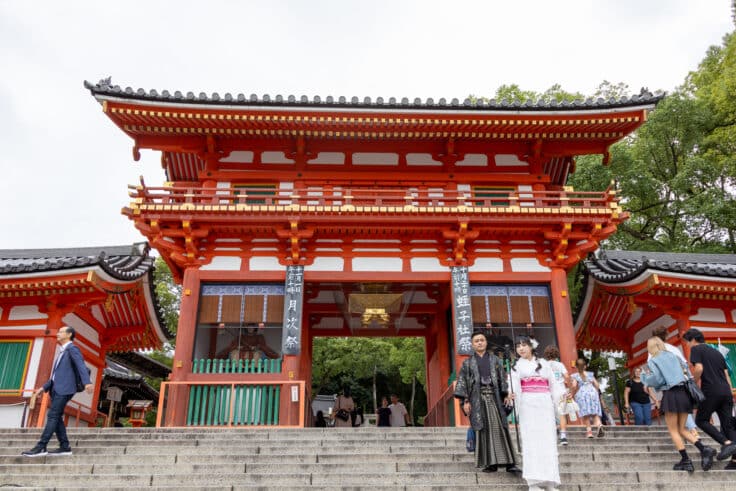
Next head to Yasaka Shrine– one of Kyoto’s most loved. You’ll spot its bright orange gate from the street, and once you pass through, you’ll find a spacious courtyard, paper lanterns strung in neat rows, and smaller shrines tucked into every corner.
There were quite a few people when I went in the afternoon– but I got to see a ceremony while I was there so I’m glad I stopped by then. If you want to see it when it’s quieter, head there first thing in the morning or later at night.


Unlike some of Kyoto’s more solemn temples, Yasaka feels cheerful and energetic. Even if you’re just passing through on your way to Gion or Maruyama Park, it’s worth stopping. Ring a bell, make a quick wish, and admire the fun, colorful details of the buildings.
Late Afternoon: Shopping (or Temples)
Make your way across the river to Teramachi to spend some time shopping. There are a ton of places to find souvenirs in this covered shopping street.
You can pick up locally made pottery, washi paper, incense, folding fans, T-shirts, tote bags, or just enjoy wandering and seeing what’s there.
I especially loved checking out the kimono shops– Musubi has two stores here that are worth taking a look at. And I saw lots of those comfy kimono pajamas that hotels provide so you can take your own set home.
Or, if you’re not into shopping, head hop on the train (just tap your IC Card) and head to Kyoto Station to check out a couple more temples.
The To-ji Temple is home to Japan’s tallest wooden pagoda (5 stories!) that stands out against Kyoto’s skyline. It’s especially beautiful during cherry blossom and autumn seasons, when the gardens around the temple are lit up in the evening.


Or head to Higashi Hongan-ji Temple which I just sort of happened upon. It’s one of the largest wooden structures in the world but feels peaceful and open, with wide wooden halls and a quiet garden.


Evening: Pontocho Alley + Dinner
As the sun goes down, head over to Pontocho Alley.
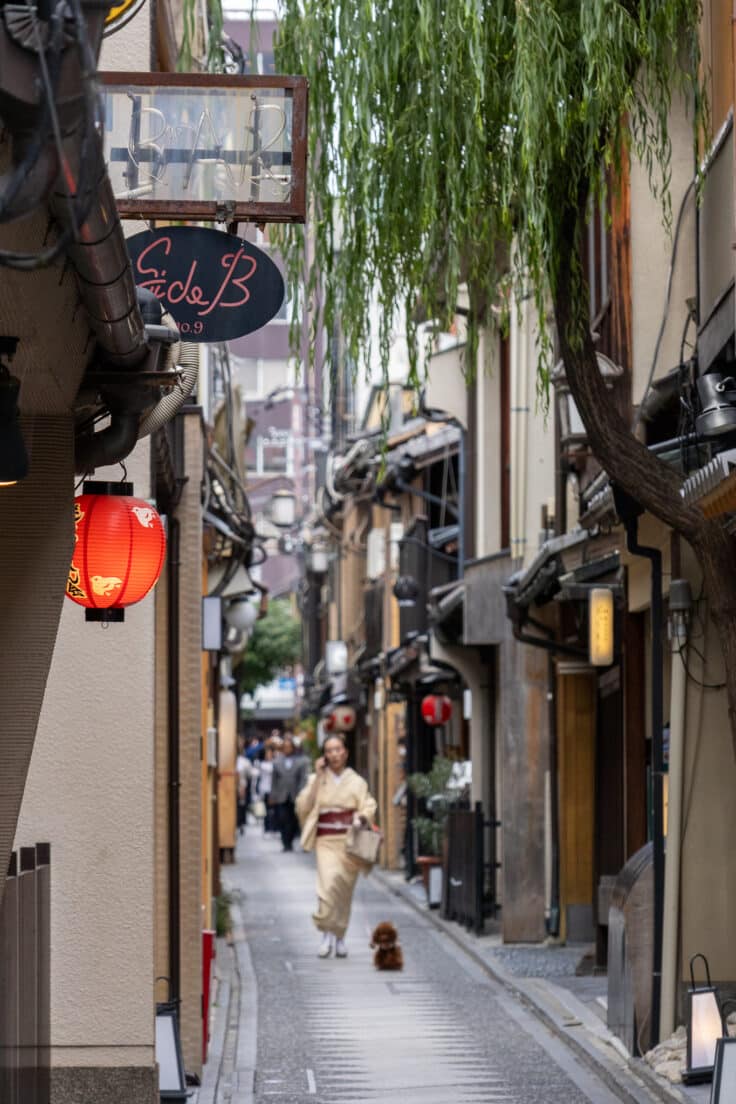
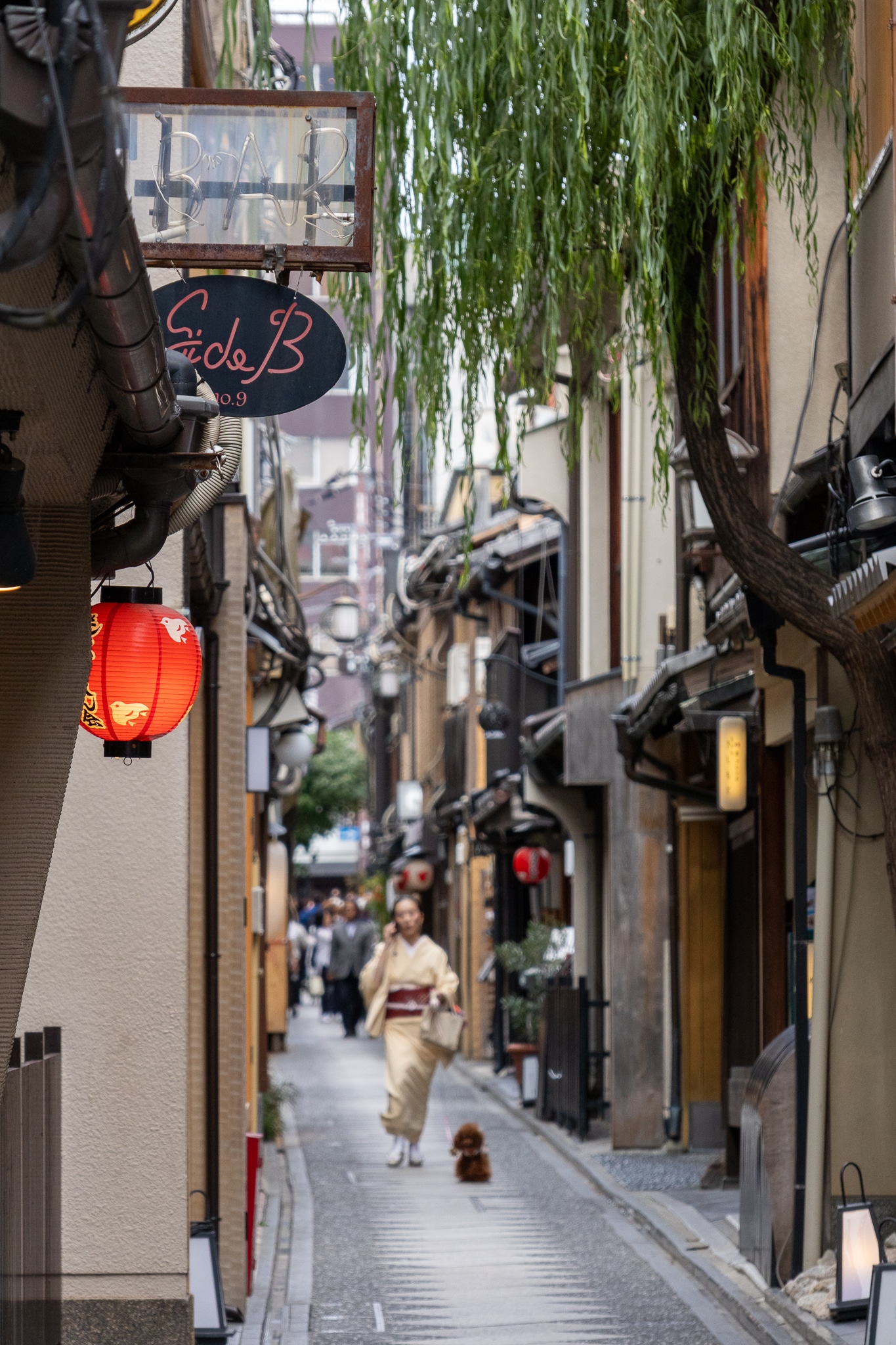
This is one of Kyoto’s most lively spots for food, drinks, and just soaking up the vibe. A narrow, lantern-lit lane that runs parallel to the Kamogawa River, it feels like something out of a movie once the sun goes down.

Pontocho is lined with restaurants ranging from cozy izakayas to yakitori joints to upscale kaiseki spots. While many places are tucked behind nondescript wooden facades, don’t let that fool you– some have incredible river views. A few even offer kawadoko seating on raised platforms over the water during the warmer months.
It’s the perfect way to end your day– strolling slowly down the alley, letting your nose (and curiosity) guide you. Even if you don’t eat here, it’s absolutely worth walking through for the experience.

Day 1 Summary:
- Gion without the crowds
- Visit Chion-in Temple
- Stroll Maruyama Garden
- Experience Yasaka Shrine
- Go shopping (or not)
- Pontocho Alley + Dinner
🏯 If you’re looking for a full 10 Day Japan Itinerary, check out my post that takes you to the big sights and a bit off the beaten path too.
Day 2: The Kurama to Kibune Hike
Today’s theme: fresh mountain air, forest shrines, and riverside charm. The Kurama to Kibune trail is one of the best ways to see Kyoto’s quieter, more natural side– and it’s easy to reach by train.
🎋 Hey! If you’d rather walk through a bamboo forest instead of hiking, visit Arashiyama Bamboo Grove. Early morning is best for magical light and fewer people.


The trail connects the mountain village of Kurama with the riverside hamlet of Kibune, and along the way you’ll pass through towering cedar trees, mossy stone lanterns, quiet shrines, and forest paths that feel far removed from the city despite being just 30 minutes from downtown Kyoto by train.
It’s not a difficult hike, but it does involve a bit of climbing so you’ll want good shoes and a bottle of water.
You can start in either direction but I started in Kurama so I could get the hard part over with first while I was full of energy and could grab lunch at the end.
Getting There
Take the Eizan Railway from Demachiyanagi Station to Kurama Station (about 30 minutes). The ride itself is nice as you’ll pass through lush countryside and small villages that give you a sense of what Japan is like outside of the cities. It’s the kind of train ride that makes you instantly breathe slower.
The line is private, so your JR Pass won’t cover it. Bring cash or just tap your IC card.
Morning: Kurama Temple & Forest Walk
From Kurama Station, follow signs uphill toward Kurama-dera Temple.
🚠 Hey! There’s a funicular if you want to skip the first steep part– but for me walking through the trees is part of the magic.
You’ll wander through beautiful forests, past picture-perfect ponds, and up moss-covered steps.
Stop for a bit at the Yuki-jinja Shrine, known for its giant cedar tree, and pick up one of the good luck charms before you continue on.


You’ll reach the temple’s main hall after about 45 minutes from the start, where the view opens to the mountains. Take a long breather here– it’s worth lingering at the observation deck. If you’re lucky, you’ll also get to see an offering being made at the Temple.


Then continue northward along the mountain ridge to the Root Path created by the tree roots not being able to penetrate the hard ground of the mountain. From there, the trail gradually descends into Kibune.


The most peaceful place along the way for me was the Okunoin Maōden Temple ❤️where the only sound I heard was the flapping of the banners and the wind through the trees. Since I knew I was almost at the end of my hike, I took an extra few minutes to soak it in before heading off to lunch.
The total Kurama to Kibune hike takes about 2–3 hours at a leisurely pace, depending on how often you stop for photos (which, trust me, will be often).
Lunch: Kibune Village
Once you reach Kibune, you’re rewarded with one of the most charming little villages in the region. Built along a narrow river valley, Kibune is known for its traditional inns, riverside restaurants, and the beautiful Kifune Shrine, which is dedicated to the god of water and rain.
In summer, many restaurants build wooden platforms right over the river, so you can dine with your feet dangling above cool mountain water— it’s called kawadoko.

Try:
- Cold somen or soba noodles
- Grilled river fish
- Matcha desserts
Even if you’re not hungry, it’s worth lingering in the village before catching the train back.
Afternoon: Kifune Shrine & Return
Before heading back, visit Kifune Shrine, a lovely spot dedicated to the deity of water and rain. Its lantern-lined steps are one of Kyoto’s most photogenic scenes.
Unfortunately the rain started while I was eating lunch so I had to skip this one.
From Kibune, it’s an easy 20-minute walk (or quick bus) to Kibuneguchi Station, where you can take the Eizan Line back to Kyoto.
If you still have energy, stop by Kurama Onsen, a hot spring near Kurama Station, and soak your legs before returning– pure bliss after a mountain hike.
Evening: Downtown Kyoto
Back in the city, treat yourself to one final Kyoto meal. If you didn’t try it yet, go for kaiseki, Kyoto’s elegant multi-course dining experience that celebrates seasonal ingredients and presentation.
Budget-friendly option? Head to an izakaya for shared plates and a casual, local vibe. Or maybe grab some yakitori or okonomiyaki- both great for dinner + a show.

Day 2 Summary:
- Eizan Railway to Kurama
- Hike Kurama-dera → Kibune (2–3 hrs)
- Lunch in Kibune village
- Visit Kibune Shrine
- Optional: Kurama Onsen
- Return to Kyoto for dinner
If You Have More Time in Kyoto
I could spend a week in Kyoto and still barely touch the surface. It’s most definitely a place I’d like to come back to.
When I do come back, these are some of the things to do in Kyoto that are on my list:
- See the Kinkaku-ji (Golden Pavilion) reflected in the pond.
- Take a Ramen and Gyoza Cooking Class so I can make them at home.
- Visit Fushimi Inari Taisha at sunrise to photograph the iconic torii gates and hike.
- Head to Kiyomizu-dera for sweeping hilltop views of the city.
- Grab street food for lunch at Nishiki Market.
- Learn more about geisha culture with a tour of Gion.
🍜 Book a Ramen and Gyoza Cooking Class here for a taste of Japan you can make at home.
Planning your Kyoto Itinerary for 2 Days
Ready to come visit this gorgeous city? Check out details below to help you plan your trip.
📚 And if you want to dig deeper into Japan, check out my list of Books and Movies Set in Japan to get you excited for your trip.
Where to Stay in Kyoto
For a short visit, location is everything. You’ll want to stay somewhere central so you can reach the highlights easily.
🏮 Check out my guide to the Best Stays in Kyoto for info on areas and traditional stays.
- Gion🏮 – Classic Kyoto charm, perfect for evening walks among lanterns and wooden machiya houses.
Hotel suggestion: Seikoro Ryokan for history, The Celestine for a gorgeous onsen and a Michelin star restaurant, or Kyoto Inn Gion for a great mid-range option. - Kyoto Station Area – Convenient for trains, subways, and buses; great if you’re coming or going by Shinkansen.
Hotel suggestion: Kyoto Century Hotel (right next to the station). - Downtown Kawaramachi – Lively, walkable, full of food spots in Pontocho Alley.
Hotel suggestion: Gate Hotel or Hotel Resol Kyoto Kawaramachi are both right in the middle of things.
⭐️ Book The Celestine Hotel for its gorgeous onsen, Michelin star restaurant, and perfect location in Gion.
Getting to Kyoto
It is possible to fly directly into Kyoto. If you’re coming from Tokyo or elsewhere in Japan, the train is your best bet.
🚉 Check out my article on Touring Japan by Train for the easiest way to get around.
Getting around Kyoto
Kyoto’s public transportation is easy to navigate once you get your bearings.
- IC Card: Grab an IC Card (I put the Suica card in my Apple Wallet on my phone) to tap for buses, trains, and subways.
- Walking: Some areas (like Higashiyama and Gion) are best explored on foot and they’re too charming not to.
- Bikes: Kyoto is bike-friendly, and many hotels rent bicycles.
- Taxis: Readily available and great when you’re short on time (but not on budget).
🚌 If you have mobility issues, a hop-on hop-off bus is a great option. I took one in London and it made sightseeing super easy!
What to Eat in Kyoto
Kyoto is heaven for food lovers. Here are a few dishes and treats to hunt down during your two days:
- Yuba (tofu skin) – A silky Kyoto specialty served fresh or fried.
- Kaiseki – Traditional multi-course meal; art on a plate.
- Matcha everything – Ice cream, lattes, cakes, soba noodles… Kyoto is matcha central.
- Obanzai – Homestyle Kyoto cuisine, often served in cozy, family-run restaurants.
- Yatsuhashi – Sweet rice flour treats filled with red bean paste.
Or join a food tour to try a little bit of everything.
Tips for Your Kyoto Trip
✅ Wake up early. Kyoto’s big attractions are much quieter before 8 a.m.
✅ Don’t over-schedule. Kyoto rewards slowing down– stopping for tea, wandering side streets, or people-watching near the Kamo River.
✅ Pack light. You’ll be taking off your shoes at temples, so easy-on shoes are a must (my trusty Birkenstock clogsmade the cut).
✅ Bring cash. Small shops and shrines often don’t take cards.
✅ Plan ahead for cherry blossom or fall season. Hotels book out fast, and the city gets packed. 🌸
When you purchase items through links on my site, I earn a tiny commission at no cost to you.
Thank you for purchasing through me- you’re the best! 😍
Ready to plan your trip?
Here are my favorite travel websites to get you started.
✈️ Flights 🏨 Hotels 🚃 Trains
🚗 Car Rental 🤞 Insurance 🏰 Activities
Questions about Kyoto
Is 2 days enough for Kyoto?
Two days is a great amount of time to see some of Kyoto’s top sights — especially if you stick to a smart itinerary. You won’t see everything, but you’ll get a solid mix of temples, traditional neighborhoods, local food, and even a nature escape like the Kurama to Kibune hike.
What’s the best time of year to visit Kyoto?
Spring (late March to early April) for cherry blossoms and fall (late October to mid-November) for autumn leaves are stunning. That said, Kyoto is beautiful year-round — even in winter, the temples look dreamy with a dusting of snow.
Where should I stay in Kyoto for a short visit?
Gion, Downtown Kawaramachi, or near Kyoto Station are great picks for a 2-day trip. They’re well-connected and give you easy access to food, transport, and major sights. Check my post Where to Stay in Kyoto for my top picks.
Can I do the Kurama to Kibune hike in one day?
Yes! The Kurama to Kibune hike takes about 2–3 hours at a relaxed pace, making it an easy half-day trip. You can visit the temples, have lunch in Kibune, and still be back in the city by late afternoon. I wish I had spent more time in the temples along the way just soaking it in.
What should I wear for the Kurama to Kibune trail?
Comfy walking shoes with decent grip, layers you can peel off, and socks without holes (you’ll be taking your shoes off at temples). The path is forested and can be a little slippery after rain but it’s overall pretty easy.
How do I get to Kurama from Kyoto?
Take the Eizan Railway from Demachiyanagi Station to Kurama Station. It takes about 30 minutes, and while it’s not covered by the JR Pass, you can use an IC card or pay cash.
Still have Questions? 🤔
Get in touch and I’ll do my best to answer them!
⭐️ My Top Picks for Kyoto:
- Top Hotel- The Celestine Hotel for its gorgeous onsen, Michelin star restaurant, and perfect location in Gion.
- Top Activity- A Ramen and Gyoza Cooking Class for a taste of Japan you can make at home.
- Top Day Trip- Take a Day Trip to Nara to visit the giant Buddha, UNESCO sites, and friendly deer.
Final Thoughts this Kyoto Itinerary
Two days in Kyoto might sound short, but it’s the kind of trip that stays with you. You’ll come home remembering the quiet echo of temple bells, the smell of cedar on the Kurama trail, and that perfect bite of matcha cake you didn’t know you needed.
If you want to go deeper (packing tips, book & movie pairings, or Japan rail passes that make it easy to explore beyond Kyoto), check out some of my other Japan posts:
👉 Tour Japan by Train
👉 Kanazawa Itinerary
👉 What to Wear in Japan
Whether you’re squeezing in a weekend getaway or adding Kyoto to a longer Japan trip, this 2-day Kyoto itinerary covers just enough to make it unforgettable.
Happy Travels! 👘