


If you have ever come home from a trip feeling like you need a vacation from your vacation, you are not alone.
A lot of itineraries look great on paper. Three cities in five days. Early trains. Packed sightseeing lists. A dozen “must-sees” squeezed into every hour. It can feel productive, but it can also feel exhausting.
That is exactly why I love slow travel.
Slow travel is not about doing nothing. It is about doing less, better. It’s about choosing depth over speed and connection over constant movement. And once you start planning trips this way, it becomes very hard to go back.
It’s easier to plan, easier while on the trip, and you’ll come home rested and refreshed instead of needing to take a vacation to get over your vacation.
If you are wondering how to plan a slow travel itinerary, the biggest shift is simple: choose fewer places, stay longer, and leave room for the trip to unfold. That is where the best moments usually happen.
When you purchase items through links on my site, I earn a tiny commission at no cost to you.
Thank you for purchasing through me- you’re the best! 🤩
- What is a slow travel itinerary?
- Why plan a trip this way?
- Step 1: Decide how you want the trip to feel
- Step 2: Choose fewer destinations than you think you should
- Step 3: Pick a home base
- Step 4: Stay at least three nights when you can
- Step 5: Plan only one major thing per day
- Step 6: Build in empty space on purpose
- Step 7: Plan around neighborhoods, not just attractions
- Step 8: Leave room to go back to places you love
- Step 9: Be realistic about transit time and energy
- Step 10: Let go of the idea that you have to do everything
- A simple slow travel itinerary formula
- What a slow travel day can actually look like
- Signs your itinerary is too packed
- My Favorite Travel Websites
- FAQ: How to Plan a Slow Travel Itinerary
- Thoughts on how to plan a slow travel itinerary
- Need Help Planning Your Slow Travel Itinerary?
⭐️ My Top Picks for Slow Travel:
- SPAIN– with afternoon siesta and evening tapas, Spain is a great slow travel destination
- JAPAN– there is so much to see and such varied places along these gorgeous islands
- ITALY– the entire country is built around hours-long meals and the idea of slowing down to enjoy la dolce vita
- ALBANIA– if you’re looking for an extra-long stay, many people can stay here visa-free for 90 days
What is a slow travel itinerary?
A slow travel itinerary is a trip plan built around spending more time in fewer places.
Instead of racing through a destination trying to see everything, you create a schedule that gives you time to settle in, wander, notice small details, and actually enjoy where you are. It is less about checking boxes and more about experiencing a place in a way that feels real.
That might mean picking one home base instead of three. It might mean staying four nights instead of two. It might mean planning one major sight each day and letting the rest happen naturally.
The point is not to be lazy. The point is to travel in a way that feels more human.

Be sure to sign up for access to my
⭐️Travel Resource Library⭐️
where you’ll find all sorts of travel help like itinerary planning, packing lists, and much more!
Why plan a trip this way?
The biggest reason is that slow travel usually feels better.
When you are not constantly packing, unpacking, navigating a new train station, or rushing to your next booking, you have more energy to actually enjoy the place you came to see. You notice more. You remember more. And the whole trip feels less like a performance and more like an experience.
Slow travel also gives you:
More connection
When you stay longer, you start to understand a destination beyond its headline attractions. You notice what time people eat dinner, which streets are lively at night, where locals linger over coffee, and which little bakery is worth going back to twice.
Less stress
You are not dragging your suitcase across cobblestones every other day or trying to learn a brand-new neighborhood every 48 hours. You have time to settle in, breathe, and enjoy yourself.
Better memories
The moments that stick are rarely just the big landmarks. They are the long lunches, the favorite café, the market you stumbled into, the evening walk that turned into gelato, or the quiet morning when a place finally started to feel familiar.
Lower costs
Moving less often can mean fewer train tickets, fewer taxis, fewer rushed decisions, and more chances to book longer stays at better rates.
🏡 Check out rental houses for longer stays that can save you money.

Step 1: Decide how you want the trip to feel
Before you start plugging cities into a spreadsheet, ask yourself one question:
How do I want this trip to make me feel?
Peaceful? Romantic? Cozy? Inspired? Grounded? Food-focused? Rested?
This matters more than people think. If you want a peaceful trip, planning six hotel changes and a sunrise activity every morning is probably not going to get you there. If you want a trip that feels immersive and local, staying in one neighborhood longer makes more sense than bouncing around just to say you saw more.
I love planning around feeling first because it helps filter your choices. It makes it easier to say no to things that look good on paper but do not fit the experience you actually want.
🇬🇧 Check out Herefordshire England for leisurely drives in the countryside.
Step 2: Choose fewer destinations than you think you should
This is the hardest part for most people.
When you are excited about a trip, it is tempting to squeeze in one more city, one more stop, one more “while we’re there” detour. But if you want a slow and crowd-free travel itinerary, the fastest way to improve it is usually to cut something.
Or more than one.
A good rule is this: if your itinerary feels packed, it probably is.
For a one-week trip, one or two destinations is often enough. For a long weekend, one destination is usually best. Even on a longer trip, you do not need to move every couple of days for it to feel full.
You are not missing out by seeing less. You are giving yourself a better chance to actually enjoy what you do see.
⛩️ Take a visit to Kinosaki Onsen in Japan to experience the thermal baths in this spa town.
Step 3: Pick a home base
One of the easiest ways to slow down a trip is to choose a home base.
Instead of sleeping somewhere new every night or two, pick one town, city, or neighborhood where you can settle in. From there, you can explore deeply or take an occasional day trip without the constant hassle of moving hotels.
A home base gives you rhythm. You get to learn the area, find your favorite coffee spot, figure out how the day flows, and stop feeling like you are always in transit.
This is one of my favorite ways to travel, especially in places where there are a lot of nearby towns or smaller destinations worth exploring. You get variety without losing that grounded feeling.
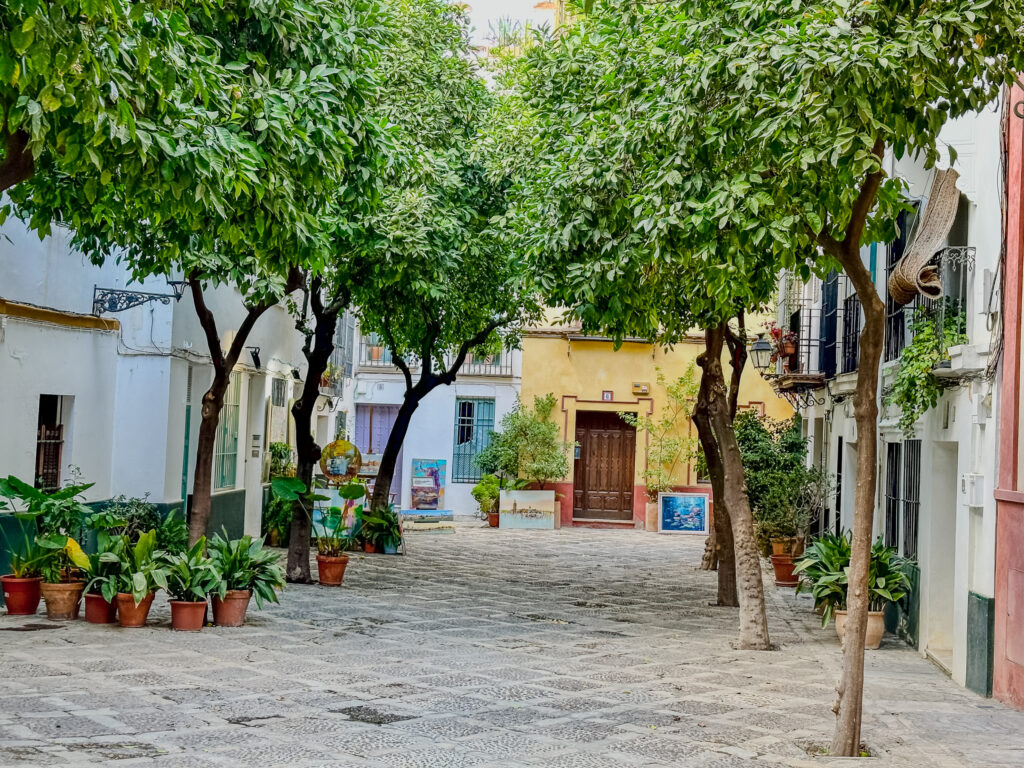
Step 4: Stay at least three nights when you can
If you really want a trip to feel slower, three nights is a great minimum.
That gives you one day to arrive and settle in, one full day to explore, and one more day to either see something deeper or simply enjoy the place without pressure. Two-night stays can work, but they often still feel a little quick. One-night stays almost always feel rushed unless there is a very specific reason for them.
The longer you stay, the more the trip starts to soften. You stop operating in arrival mode and start actually living there, even if only briefly.
🇪🇺 Don’t make these Mistakes When Planning a Trip to Europe.
Step 5: Plan only one major thing per day
This tip changes everything.
A lot of people build itineraries by stacking one activity after another from morning to night. Museum. Lunch. Cathedral. Market. Tour. Dinner reservation. Rooftop. It looks exciting, but it leaves very little room for real life, energy levels, weather changes, or spontaneous finds.
I usually prefer planning one major thing a day.
That could be one museum, one day trip, one hike, one long market visit, or one sightseeing block. Then I leave the rest open for wandering, lingering over meals, shopping, relaxing, or following whatever catches my attention.
This is the sweet spot. You still have structure, but you do not feel trapped by your own itinerary.
🏰 Head to Caceres Spain to experience a frozen-in-time Renaissance town off the beaten path.
Step 6: Build in empty space on purpose
Unscheduled time is not wasted time.
In fact, it is often the best part of the trip.
This is where slow travel starts to shine. You leave room for a long lunch. For getting a little lost. For walking down a side street because it looks pretty. For sitting in a square with a drink and people-watching. For returning to a place you loved the day before.
Some of the best travel moments are the ones you never could have planned ahead of time. But that only happens if your itinerary has space for them.
When I am planning a trip, I protect that open time. I do not treat it as filler. I treat it as part of the experience.
Step 7: Plan around neighborhoods, not just attractions
One of the biggest mistakes people make is planning only for sights.
They make a list of landmarks, museums, viewpoints, and restaurants, but they do not think much about how they want to spend their time between those things.
Slow travel works better when you plan by area.
Choose a neighborhood you want to wander. Pick a market you want to explore slowly. Think about where you want to have coffee, where you want to walk at night, where you want to linger after dinner.
A destination is not just a set of top attractions. It is a feeling, a rhythm, a collection of streets and little moments. That is what you are trying to make room for.
🇦🇱 If you want undiscovered, the mountains of Theth, Albania are absolutely wonderful for hiking.
Step 8: Leave room to go back to places you love
This might sound small, but it is one of my favorite parts of slow travel.
Go back to the same bar if you loved it. Return to the same café for breakfast. Walk the same street again at a different time of day. Revisit a square at night if you saw it in the morning.
Tiny routines make a place feel familiar, and that familiarity is part of what makes a trip memorable.
When you are moving too fast, every experience is one and done. But when you stay longer, you get to have favorites. That changes the whole feeling of a trip.
Step 9: Be realistic about transit time and energy
A slow travel itinerary is not just about the number of stops. It is also about the energy required between them.
A two-hour train ride is never just a two-hour train ride. There is packing, checking out, getting to the station, waiting, hauling luggage, arriving, finding the next hotel, and getting oriented again. Every move takes more out of your day than you expect.
When you plan your itinerary, be honest about that.
If changing locations will eat up most of a day, ask whether it is worth it. Sometimes it is. Sometimes that next stop is absolutely worth the effort. But a lot of the time, staying put will give you a better trip.
Step 10: Let go of the idea that you have to do everything
This is really what slow travel planning comes down to.
You will not see everything. You were never going to see everything anyway.
Trying to do it all usually means you experience less of each thing. You spend the whole trip glancing at the clock, thinking about what is next, or worrying whether you are behind schedule.
It is okay to leave things for another trip. It is okay to skip the famous sight if what you really want is a long lunch and a walk through a beautiful neighborhood. It is okay to choose ease.
Some of the best trips happen when you stop trying to win at travel.
A simple slow travel itinerary formula
If you want an easy framework, here is a simple way to build your trip:
For a 7-day trip:
- Choose 1 to 2 destinations
- Stay 3 to 5 nights in each place
- Plan 1 major activity per day
- Leave at least one half day completely open
- Use one place as a home base if possible
For a long weekend:
- Choose 1 destination
- Stay in one hotel
- Pick 1 to 2 priority sights total
- Focus on food, walking, and neighborhood time
- Keep one part of each day unplanned
For a 10 to 14 day trip:
- Choose 2 to 3 destinations max
- Use longer stays in places that feel especially rich or relaxing
- Add day trips instead of hotel changes when possible
- Balance sightseeing days with slower reset days
📝 I created some itinerary posts for ready-made plans.
What a slow travel day can actually look like
Sometimes people hear “slow travel” and picture doing almost nothing. That is not what I mean at all.
A slow travel day can still be full. It just feels more spacious.
For example:
You sleep in a little so you are rested for the day. You grab coffee and wander a local neighborhood. You visit one museum or market late morning. You have a 2 hour lunch like the locals. In the afternoon, you shop, rest, or explore side streets. In the evening, you go back out for dinner, maybe find a wine bar, and meander slowly home experiencing the city at night.
That is still a great day. It is just not a frantic one.
Signs your itinerary is too packed
If you are not sure whether your trip needs simplifying, here are a few clues:
You are changing hotels every one to two nights
You have multiple timed reservations every day—tours, tickets, dinners.
You are visiting more than two destinations in a week
You are treating travel days like sightseeing days too (they really aren’t)
You feel stressed just looking at the plan 👈
If that sounds familiar, your trip probably needs more breathing room.
My Favorite Travel Websites
When you purchase items through links on my site, I earn a tiny commission at no cost to you.
Thank you for purchasing through me- you’re the best! 😍
Ready to plan your trip?
Here are my favorite travel websites to get you started.
✈️ Flights 🏨 Hotels 🚃 Trains
🚗 Car Rental 🤞 Insurance 🏰 Activities
FAQ: How to Plan a Slow Travel Itinerary
What is a slow travel itinerary?
A slow travel itinerary is a trip plan built around spending more time in fewer places. Instead of rushing from stop to stop, it gives you time to settle in, explore more deeply, and actually enjoy where you are.
Is slow travel only for long trips?
No. You can travel slowly on a weekend trip, a one-week vacation, or a longer trip. Slow travel is more about how you plan than how much time you have.
Can slow travel save money?
Yes, it often can. Staying in fewer places usually means lower transportation costs, fewer transfer expenses, and less last-minute convenience spending on things like taxis or overpriced meals near tourist sights.
How many destinations should I include in a slow travel itinerary?
For a one-week trip, one to two destinations is usually enough. For a long weekend, one destination is often best. The goal is to avoid constant moving so you have more time to experience each place.
Still have Questions? 🤔
Get in touch and I’ll do my best to answer them!
Thoughts on how to plan a slow travel itinerary
The best slow travel itineraries are not empty. They are intentional.
They give you enough structure to enjoy the trip, but enough space to actually experience it. They help you notice more, connect more deeply, and come home with memories that feel distinct instead of blurred together.
For me, the magic usually starts when I stop asking, “How much can I fit in?” and start asking, “What would make this trip feel really good?”
That is a much better way to plan.
If you are craving travel that feels calmer, richer, and more meaningful, start by cutting one stop, adding one extra night, and leaving one part of the day open. That small shift can change the whole trip.
⭐️ My Top Picks for Slow Travel:
- SPAIN– with afternoon siesta and evening tapas, Spain is a great slow travel destination
- JAPAN– there is so much to see and such varied places along these gorgeous islands
- ITALY– the entire country is built around hours-long meals and the idea of slowing down to enjoy la dolce vita
- ALBANIA– if you’re looking for an extra-long stay, many people can stay here visa-free for 90 days
Need Help Planning Your Slow Travel Itinerary?
Check out my Travel Help Page for all sorts of help including Custom Travel Planning if you want support planning a trip that feels thoughtful instead of overwhelming.
Happy (slow) travels!



Leave a Reply